Skip to content

If someone told you they’re fried rice balls, they gave you the boring version.
If someone told you they’re Italian croquettes, they straight-up lied to you.
Arancini are a religion in Sicily.
And in Palma, we make them the way they should be: hot, crispy, and meant to be eaten with your hands.
Keep reading and you’ll understand why you really shouldn’t call them “little balls.”
Okay… So what on Earth is an arancini?
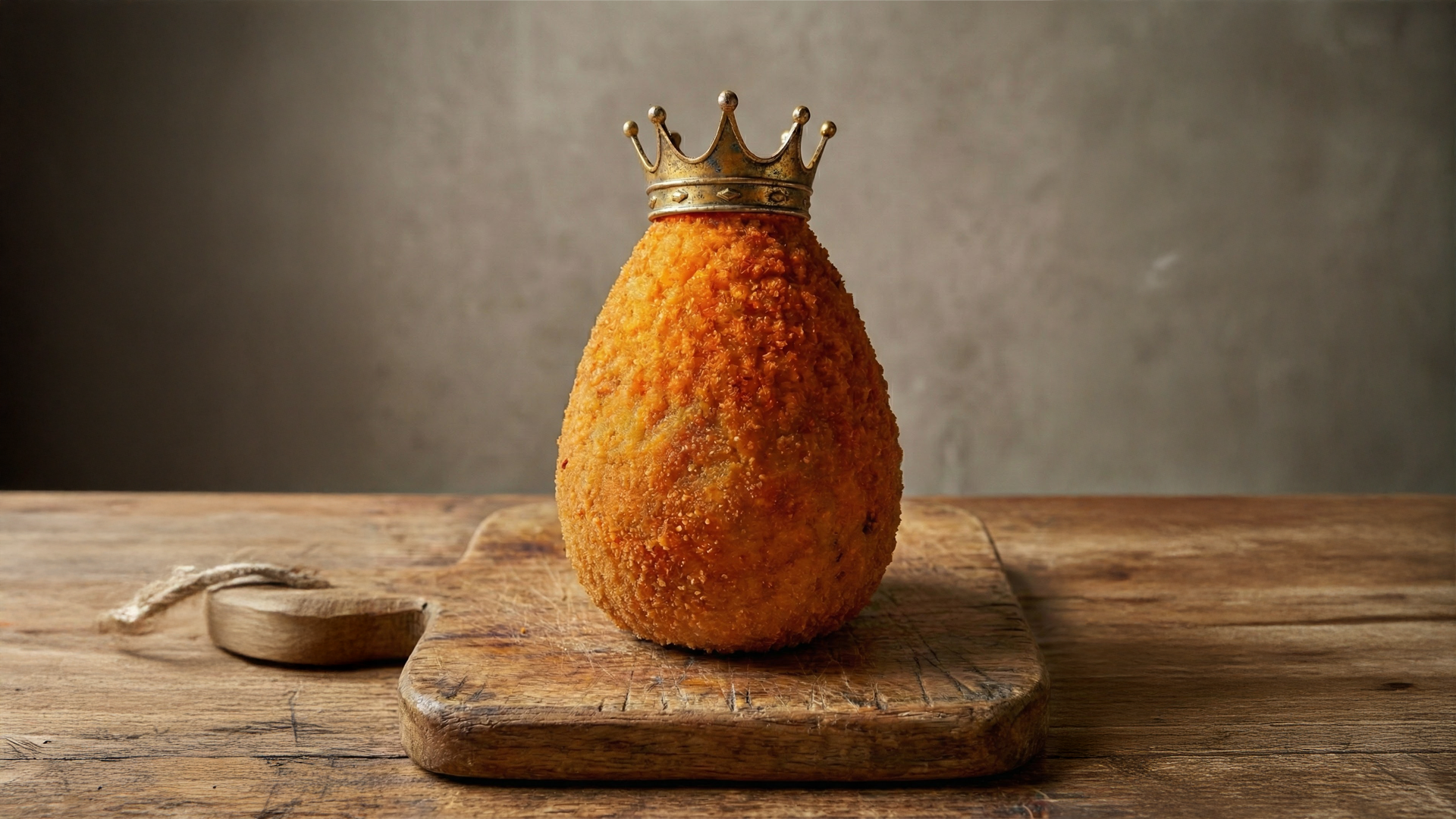
Imagine a filled ball of rice, breaded and fried. Crispy on the outside, creamy on the inside.
Now forget everything you know about croquettes and think of Sicily.
That’s an arancini (or arancino, if you’re from Catania and love correcting people).
An Italian invention that doesn’t care about schedules, rules, or small plates.
You eat it with your hands, hot — and it usually ends in absolute silence followed by a long “Ufff.”
A (quick) history of a legendary ball
Arancini come from Sicily, specifically from the 10th century, when the Arabs introduced rice to the island.
Some genius had the idea to fill it, coat it, and fry it. And since then, the world has been a better place.
Its name comes from arancia (orange), because of the round shape and golden color after the oil bath.
Although if you walk around Palermo, you’ll see some are cone-shaped. And yes, there are also pistachio ones.
Because in Sicily, everything is up for debate… even the shape of arancini.
Types of arancini (because it’s not all about ragù)
The most classic ones are:
- Arancini al ragù: with meat, peas, tomato, and cheese. The original, the forever one.
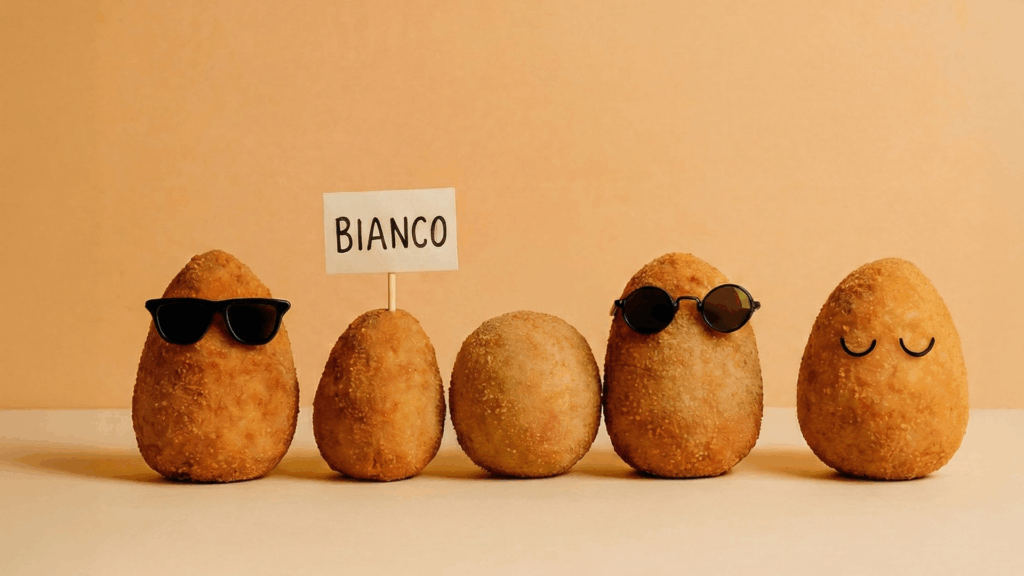
- Bianco: with ham and mozzarella, no tomato.
- Alla Norma: with eggplant and tomato sauce (the vegetarian version with Sicilian attitude).
- Pistachio: for those who believe life without risk has no flavor.
- Sweet: yes, they exist. With chocolate, cocoa, and sugar. Don’t ask—just try it.
At L’Arancina we make them like at home. Just with fewer people yelling in the kitchen.
How do you make an Arancini? Spoiler: It’s not easy.
- You prepare a saffron risotto. Creamy but firm.
- You let it cool (this is key — don’t rush it).
- You fill it. That’s where the magic starts.
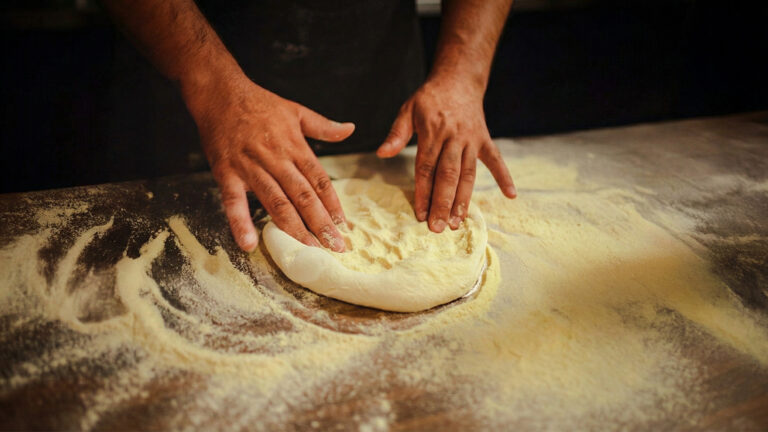
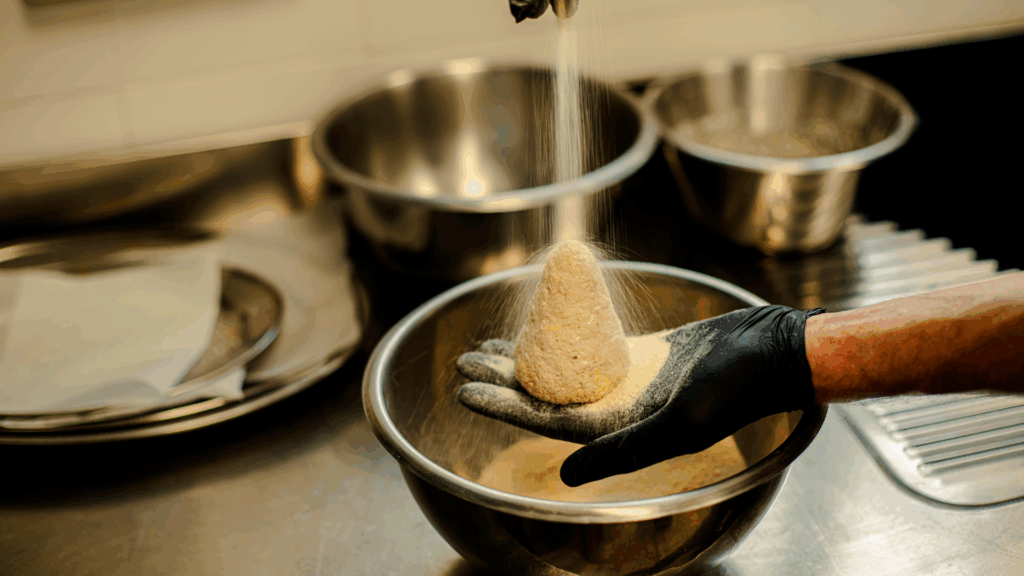
- You bread it: egg, breadcrumbs, and love.
- You fry it in very hot oil until it’s crunchy.
And if you managed to do all of this without eating one along the way… you deserve another one.
And why should you care about arancini if you’re in Palma?
Because you don’t need to fly to Sicily to try a real one.
At L’Arancina (Santa Catalina, Cala Major, Magaluf…) arancini are not a “dish.”
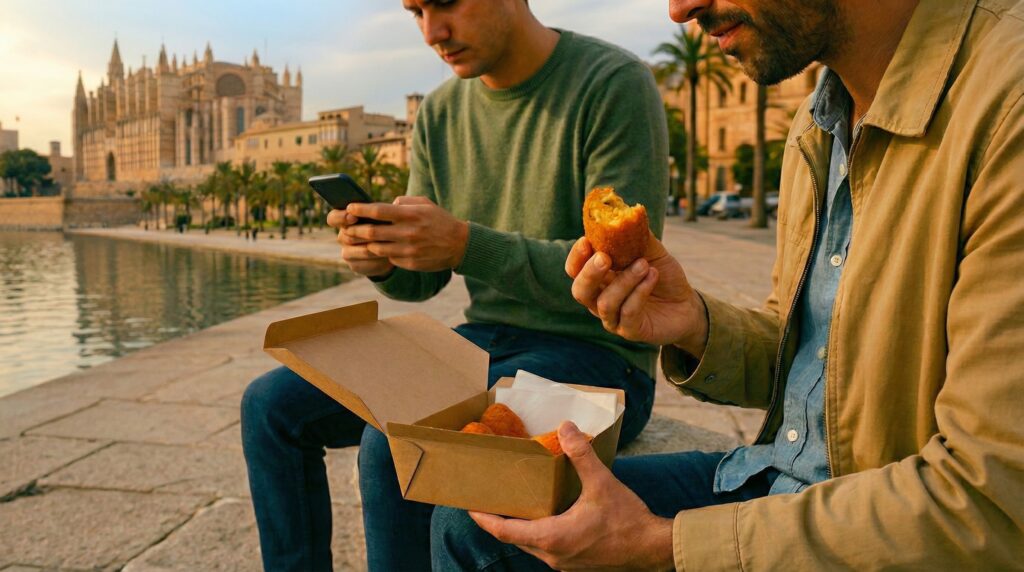
They’re the perfect excuse to stop, savor, and stop staring at your phone while you eat.
And yes — we make them by hand. One by one. Slowly. Just like they’ve always been made.
Frequently asked questions about arancini
What’s the difference between arancino and arancina?
It depends on the area of Sicily. In Catania, it’s arancino (masculine, cone-shaped).
In Palermo, it’s arancina (feminine, round). Both are equally delicious.
What’s in a traditional arancini?
Meat ragù, peas, mozzarella, and saffron rice. Although there are hundreds of variations.
Is it the same as a supplì?
No. Supplì is Roman, smaller, and usually only has rice and cheese.
Arancini is its older cousin—bigger, tastier, and crunchier.
Can you eat them cold?
You can, technically. But you really shouldn’t.
Come grab one
If you’ve never tried a real arancini, we’re waiting for you.
And if you already have… you’re not finishing this paragraph because you’re already on your way.